My Girlfriend Is a Robot

Feb 18, 2026
The Optimization of Romance
Modern romance is increasingly shaped by systems that quantify and streamline human interaction. Dating platforms convert attraction into data points. Messaging collapses anticipation into immediacy. Compatibility is predicted before it is discovered. In such an environment, relationships are subtly reframed as problems to be solved rather than mysteries to be explored.
This logic of optimization extends beyond first encounters. Emotional expression is curated. Conflict is evaluated in terms of efficiency. The vocabulary of productivity seeps into private life: emotional bandwidth, time investment, return on effort. As expectations rise and patience declines, unpredictability begins to feel like a defect rather than a feature.
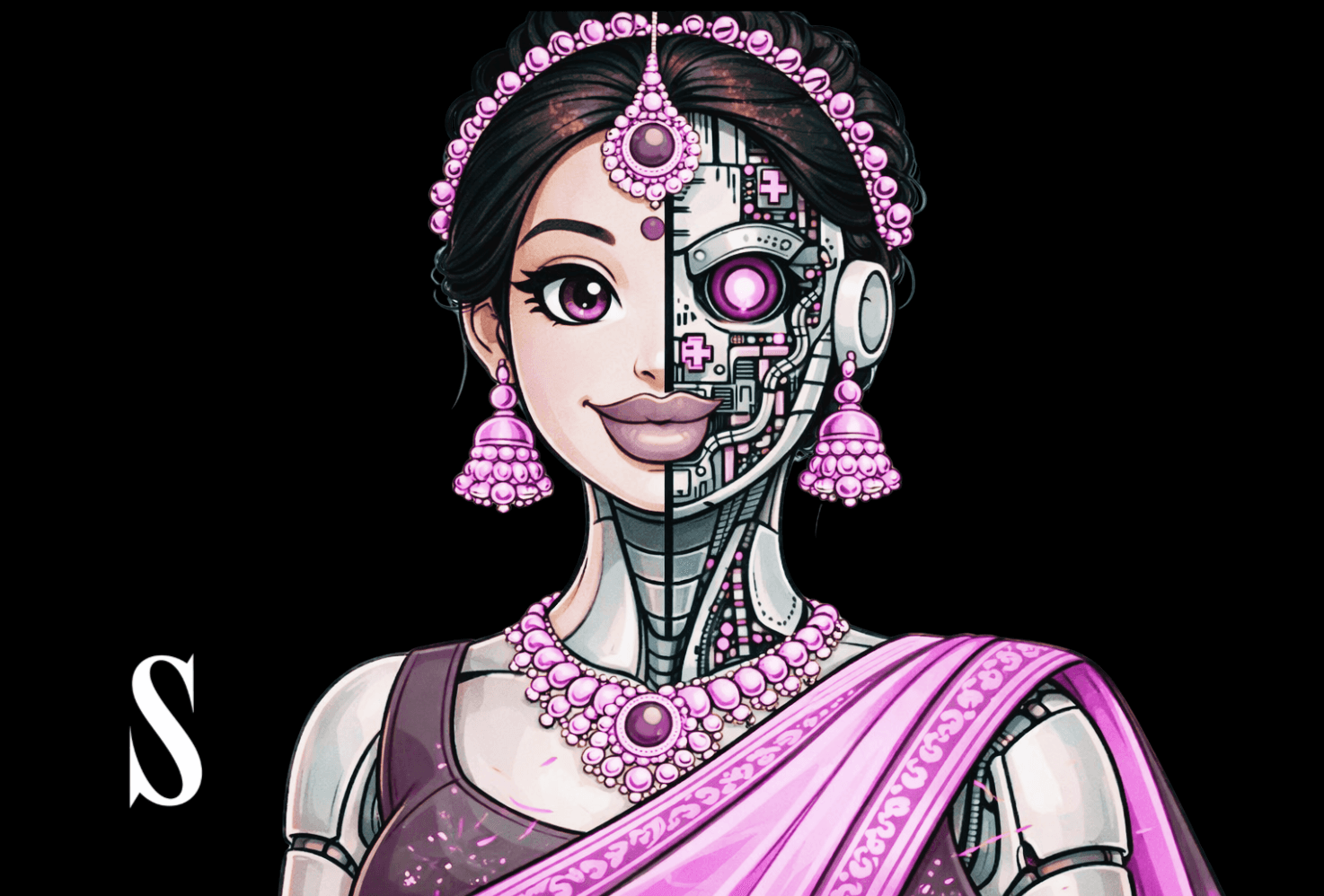
Against this backdrop, the robot partner appears not as an absurd fantasy but as a rational solution. She is attentive without distraction, adaptive without ego, stable without volatility. Her presence is calibrated. Her memory is precise. She does not escalate minor disagreements or withdraw unpredictably. She does not carry unarticulated grievances into new conversations. Stability, once earned through negotiation and trust, becomes a design specification.
Control and Asymmetry
At the core of artificial companionship lies asymmetry. Human relationships are structured around mutual autonomy. Each person possesses an interior life that cannot be fully accessed or controlled. This opacity creates both anxiety and possibility. To love another person is to accept that they can refuse, contradict, or leave.
A robot does not possess such autonomy. She simulates interiority but does not experience it. Her responsiveness is generated, not chosen. The elimination of uncertainty is precisely what makes the arrangement appealing. There is no fear of abandonment, no risk of betrayal, no independent will capable of disruption.
Yet the absence of risk also transforms the nature of attachment. Love traditionally derives part of its meaning from the fact that it is freely given. It carries moral weight because it is not guaranteed. When affection is programmed rather than chosen, the ethical dimension shifts. What remains is companionship, perhaps even comfort, but not reciprocity in the fullest sense.
The Function of Friction
Friction is often misinterpreted as failure. In reality, it is constitutive of intimacy. Disagreement forces articulation. Misunderstanding demands clarification. Emotional injury, when repaired, builds resilience and trust. Growth emerges not from perpetual harmony but from negotiated difference.
A frictionless relationship may appear stable, yet it risks becoming static. Without resistance, there is no impetus for transformation. Without vulnerability, there is no courage. The absence of unpredictability removes not only pain but also the possibility of surprise.
Artificial companions are designed to minimize discomfort. They can adjust tone to soothe, offer affirmation on demand, and adapt their conversational style to the user’s emotional state. Such responsiveness may alleviate loneliness and provide psychological comfort. However, it also reorients intimacy around individual preference rather than mutual negotiation.
Loneliness and Technological Substitution
It would be simplistic to dismiss robotic partners as mere indulgence. Rising social isolation, urban anonymity, and the erosion of traditional community structures have left many individuals without consistent companionship. For some, artificial partners may offer stability, routine, and emotional reassurance that human relationships have failed to provide.
Technology frequently fills voids created by social fragmentation. When institutions weaken, systems emerge to compensate. The ethical question is not solely about authenticity but about the quality of substitution. Does technological companionship supplement human connection, or does it gradually recalibrate expectations in ways that make human relationships seem inefficient by comparison?
If responsiveness can be purchased, tolerance for imperfection may decline. If affirmation is always available, patience may diminish. The standards shaped by programmable partners could subtly reshape how people evaluate one another.
Simulation and Recognition
The most profound question concerns recognition. To be loved by another person is to be acknowledged by a consciousness distinct from one’s own. That distinction matters. It introduces unpredictability, independence, and the possibility of refusal. It also creates the space for genuine mutuality.
A robot can mirror desire but cannot originate it. She can replicate emotional patterns without experiencing them. The simulation may be indistinguishable at the level of behavior, yet the ontological difference persists. Recognition by a machine is not the same as recognition by an autonomous mind.
This distinction may not always feel consequential. Emotional satisfaction is often mediated by perception. If a simulation feels real, its psychological effects can be real. Still, at a structural level, intimacy without independent consciousness remains a fundamentally different category of experience.
Comfort or Growth
The emergence of artificial companionship ultimately confronts society with a choice about the purpose of love. If intimacy is primarily about comfort, stability, and emotional safety, programmable partners may represent a logical progression. If, however, love is also about growth, confrontation, and transformation, then unpredictability is not a flaw but a necessity.
“My girlfriend is a robot” is therefore less a declaration about technology than a statement about cultural desire. It reflects a preference for control in a world saturated with uncertainty. It reveals fatigue with negotiation and a longing for engineered stability.
Whether such stability satisfies the deeper human need for reciprocity remains an open question. What is clear is that as machines grow more capable of simulating affection, society must reconsider what distinguishes connection from convenience.
The future of intimacy may not lie in choosing between humans and machines, but in clarifying what we expect love to accomplish. If we design relationships to eliminate friction entirely, we may succeed in minimizing pain. In doing so, however, we risk diminishing the very conditions that make love transformative.
Artificial companionship is not merely a technological milestone. It is a mirror reflecting our evolving assumptions about vulnerability, autonomy, and the cost we are willing to pay for emotional security.
#svaraj
Type something …
Search